
Introduction
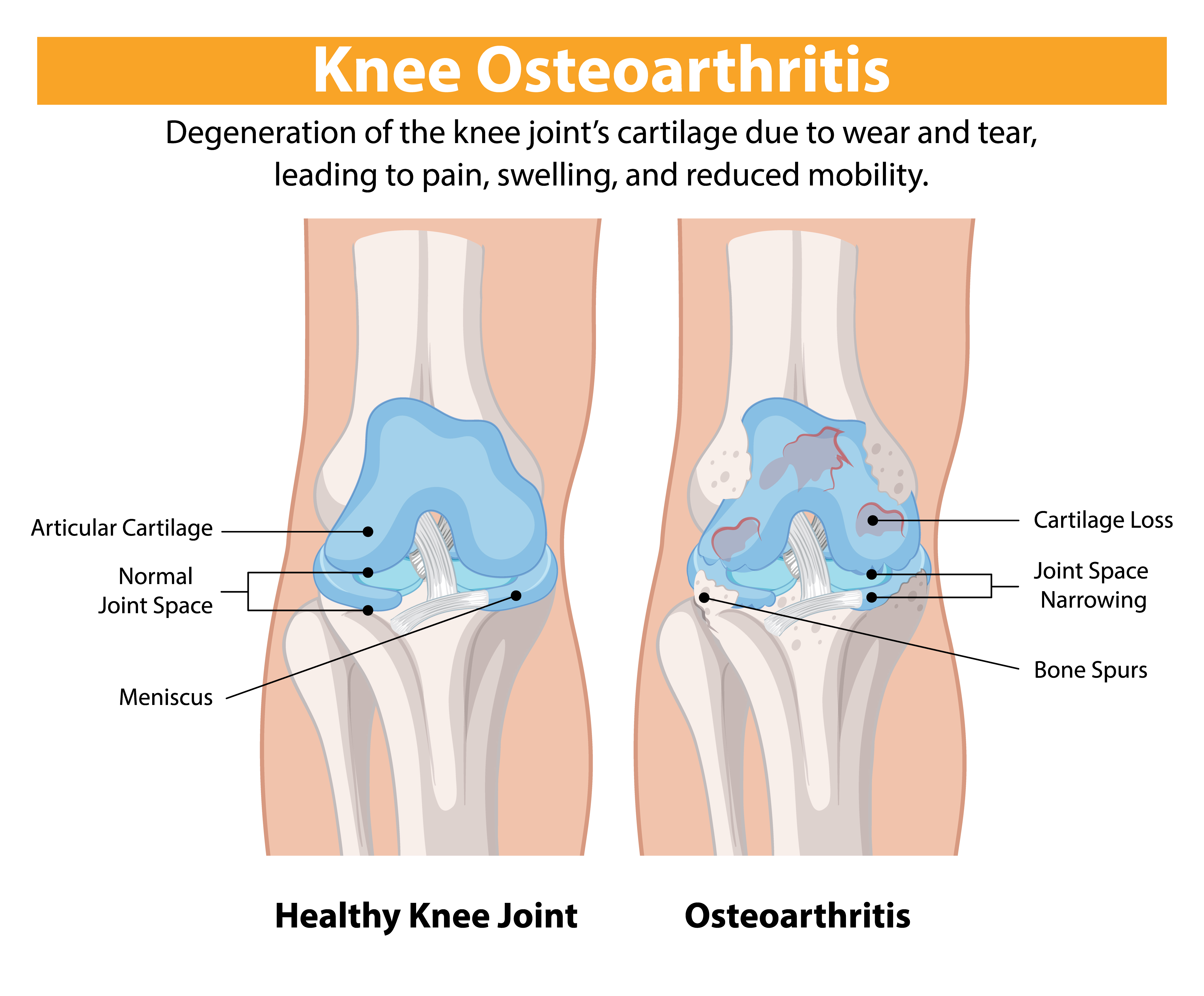
Knee osteoarthritis is a common joint problem. It happens when the cartilage in your knee wears down over time. As a result, the bones in your knee may rub together. This can cause pain, swelling, and stiffness. Many people experience knee osteoarthritis as they age. In fact, it is one of the leading causes of knee pain worldwide. According to the World Health Organization (WHO), osteoarthritis affects millions of people and can limit daily activities. Because it can impact your quality of life, understanding knee osteoarthritis is important.
Symptoms
Knee osteoarthritis can cause several symptoms. These often develop slowly and get worse over time. For example, you may notice:
However, not everyone will have all these symptoms. Sometimes, symptoms can come and go.
Causes and Risk Factors
Knee osteoarthritis develops when the cartilage in your knee breaks down. This can happen for several reasons. For instance, aging is a major cause. Over time, the cartilage naturally wears away. But other factors can increase your risk, such as:
Because these factors can add up, it is important to know your risks.
Diagnosis
Doctors use several steps to diagnose knee osteoarthritis. First, they will ask about your symptoms and medical history. Next, they will examine your knee for swelling, pain, or movement problems. Sometimes, doctors order X-rays to check for bone changes. In some cases, they may use MRI scans to look at soft tissues. Blood tests are not usually needed, but they can help rule out other causes of knee pain. Early diagnosis can help you manage symptoms better.
Treatment Options
There are many osteoarthritis treatment options. The goal is to reduce pain and improve movement. For most people, treatment starts with simple steps. For example:
If these steps do not help, surgery may be an option. However, most people improve with non-surgical treatments.
Prevention Tips
While you cannot always prevent knee osteoarthritis, you can lower your risk. Here are some helpful tips:
Because prevention is easier than treatment, these steps can make a big difference.
When to See a Doctor
If you have knee pain that does not improve with rest, see a doctor. Also, if your knee is swollen, red, or warm, get medical help. Sometimes, sudden pain or trouble moving your knee can signal a serious problem. Early treatment can prevent further damage. Therefore, do not wait if you are worried about your knee.
In summary, knee osteoarthritis is a common cause of knee pain. Many treatment options, including physiotherapy and lifestyle changes, can help. Consult The blue green clinics for personalized advice on managing knee osteoarthritis.